An investigation into the ergonomic, usability and sustainability factors that influence the design of forearm crutches.
How current crutch design fails long-term users, and what a redesign would need to address.
November 2025
Introduction
Forearm crutches are used by millions of people across the United Kingdom every year to support recovery from lower limb injuries and operations. Despite being an essential mobility aid, the design of most forearm crutches has barely changed over time and continues to cause issues with comfort, usability, and sustainability. Many users report that long term use can lead to pain, strain, and general frustration with the product.
Recent research by Hügle et al (2017) found that conventional cuff crutches, which are widely used in Europe, concentrate load along the ulnar shaft. This design flaw often results in forearm pain and discomfort for users who rely on the crutches over longer periods. To explore these problems in more depth, this report includes a semi structured interview with a long-term user of forearm crutches, providing a direct insight into real world experience and day to day challenges. Laboratory tests were also conducted to investigate the materials and overall durability of existing crutches. These findings are analysed together with secondary research from credible design and medical sources to form a picture of where improvements are needed.
Sustainability has also become an important topic within assistive product design. Many current crutches are made from materials that cannot easily be repaired or recycled, leading to unnecessary waste and short product lifespans. Addressing this problem through more modular approaches could not only reduce environmental impact but also extend product usability for individuals.
The aim of this research is to evaluate the current design of forearm crutches with a focus on ergonomics, usability, and sustainability. It aims to identify opportunities for design improvement by combining insights from both secondary and primary research. The conclusions drawn from this process will be used to develop practical recommendations and product requirements that could inform future design work.
Methodology
This report uses a combination of secondary and primary research from academic and professional sources. The intention is to use these two methods of data collection to provide evidence to support design decision making. Secondary data collection was done primarily using the Portsmouth Library’s Discovery database. Searches were refined to peer reviewed journals published between 2010 and 2025 to make sure any data was up to date. Keywords such as ergonomics, usability, and sustainability were applied to refine the search. This process ensured that the data was all academically credible.
The primary data collection was also done in an academically credible way. A semi structured interview was conducted with a long-term user of forearm crutches to gain a larger view of how day to day use doesn’t exclusively affect users physically but also emotionally. The participant who was interviewed signed a consent form that meant that everything sat in line with the university’s ethics guidelines. The interviewee will also remain anonymous within the report. In addition to the interview, laboratory analysis was conducted to assess material durability and the integrity of components within current market crutches.
All data collection followed in line with university research guidelines. The participant provided informed, written consent before the interview, and the data will be used solely for academic purposes. Any tests conducted within the laboratory were done following university safety procedures. The use of both qualitative and quantitative data were used in this report to show both numerical physical data and emotional data obtained by the interview to give a holistic overview.
Findings
Comfort and ergonomics
This section analyses both the quantitative and qualitative primary data and will review the similarities with other scientific data to show how current forearm crutch design can affect comfort, posture and strain experienced by users during use. The interview participant (Personal communication, October 23, 2025) reported consistent wrist, hand and forearm discomfort with “Old socks and zip ties used to add padding to the handles” as well as shoulder and neck pain from a constantly raised shoulder due to the correct height not being achivable on the crutch. These comments from the interviewee show that all pressure is being distributed through the forearm, wrist and hand. This indicates that the current cuff and handle geometry fail to distribute load along the forearm, forcing other areas of the upper limb to absorb stress.
Similar issues have been identified in other academic research. Hügle (2017) provides evidence that the cuff seen in most European crutches places excessive load through the ulnar shaft and nerve, which leads to muscle fatigue and long term discomfort. This also closely aligns with other scientific journals. (Werner, et al., 2025), notes in their report, “Although FCs outperform HFSCs with respect to mobility, patients prefer HFSCs due to comfort and reduced exertion”. Both studies highlight that users consistently report that there is pain along the upper limbs. Werner et al (2025) also highlights that many users will often value comfort and ergonomics over usability.
Both reports also sit in line with the interviewees’ responses when asked how much monetary value they would assign to comfortable, ergonomic crutches “I’d pay upwards of £250 for a pair of crutches that would bring me comfort in use”. According to British standard BS EN ISO 11334-1:2007, elbow crutches must satisfy requirements concerning ergonomics and load performance. The user’s experience suggests that this requirement is not consistently achieved in current designs.
Usability and emotional design
Within this section of the report, analysis will be done on the usability of forearm crutches and any emotional changes that may occur when using them on a day-to-day basis. When asking the interviewee about the more emotional effects that using the crutches, they mentioned how, “The crutches led to my developing depression due to being restricted.” The interviewee added further to this, mentioning how they had to cancel family events due to fears of the crutches being too restrictive for doing activities, as well as having to deal with the loss of dignity by crawling up the stairs.
Wang et al (2025) identify similar concerns within the crutch sector “Existing research… lacks consideration of users’ emotional needs. Walkers for the elderly should meet functional and social needs, addressing emotional requirements during use.” This finding reinforces the participants’ experience of dissatisfaction with the removal of confidence that the crutches give you.
Another issue the participant addressed was the stigma that they had when in public with the crutches. Rodrigues and de Souza (2023) also discussed this same topic where they write, “However, the problem with prescribing aid products is the association between the product and the ‘role of the sick,’ activating the stigmatisation process”. Adding to this Mori et al (2024) had similar responses from their interviewees, “User interviews have revealed concerns about negative perceptions from others regarding the large space required for storage when not in use”. Again, supporting the participants’ responses to questions of loss of dignity.
These experiences demonstrate that the usability of forearm crutches extends beyond purely physical performance, and designers should consider the emotional side that crutches provide when designing and manufacturing.
Sustainability and materials
Below are the compression test results for the aluminium crutch. The shaft length was 500mm.
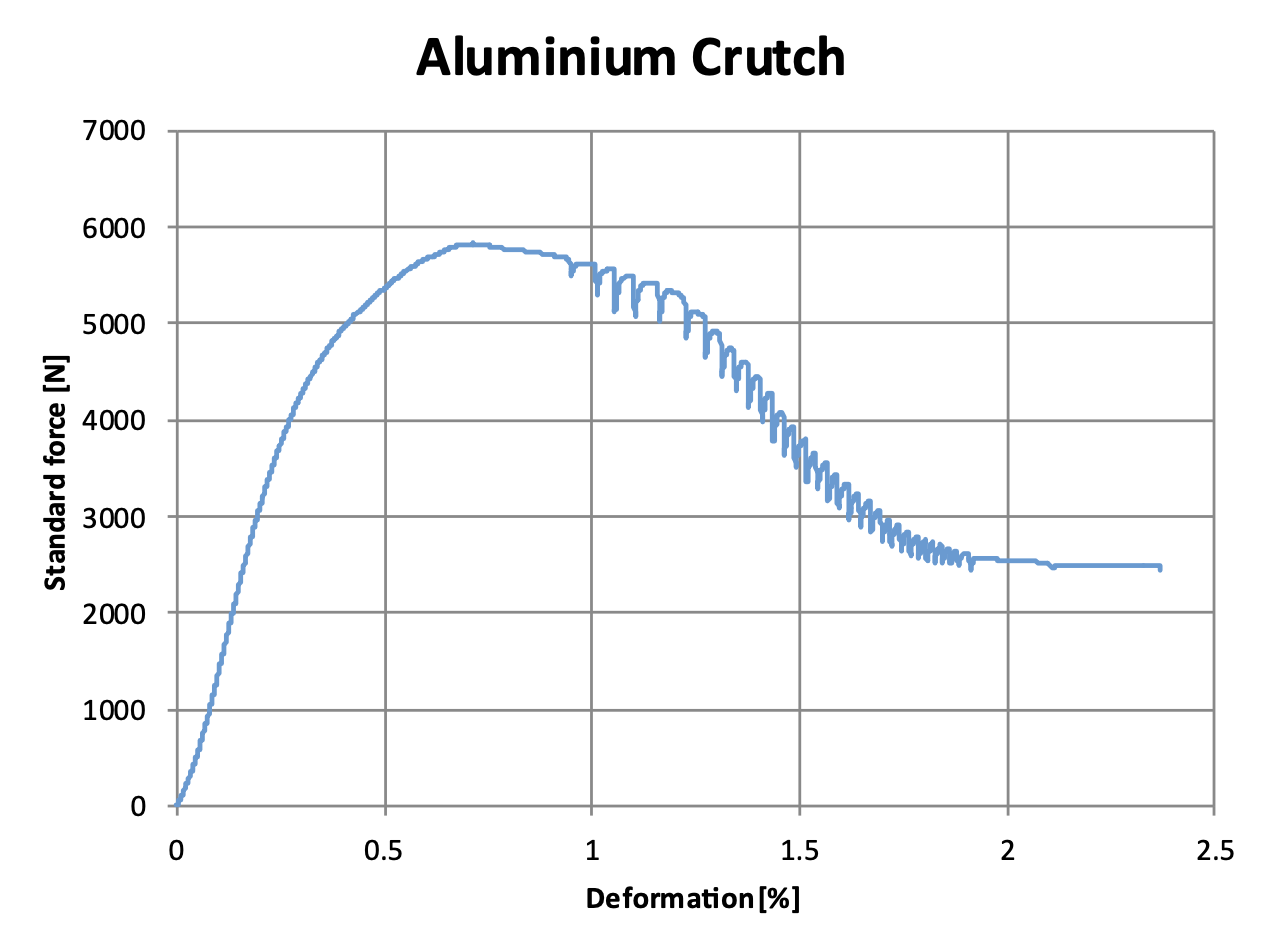 Figure 1. Aluminium crutch, 500mm shaft.
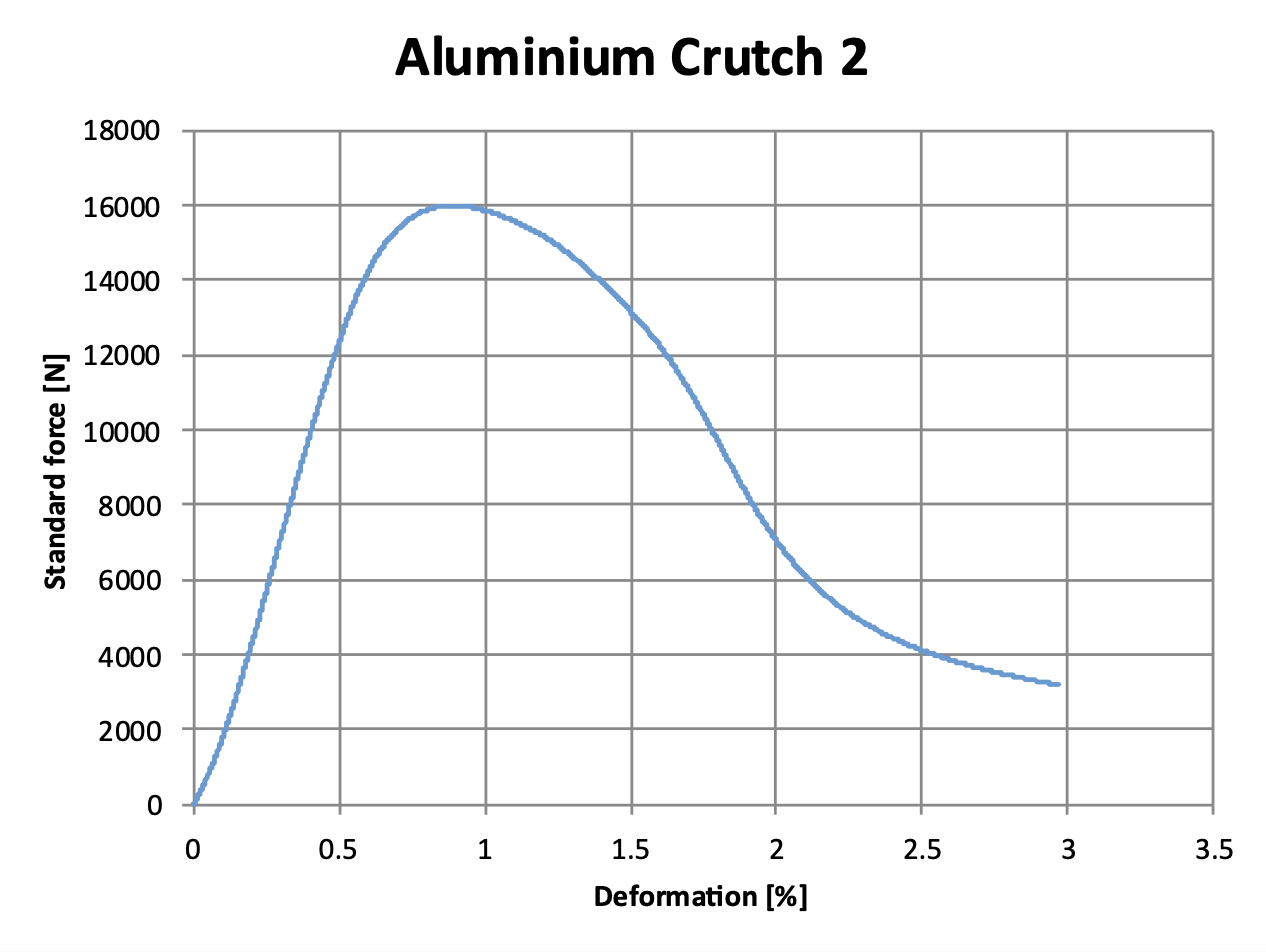 Figure 2. Aluminium crutch, shorter shaft.
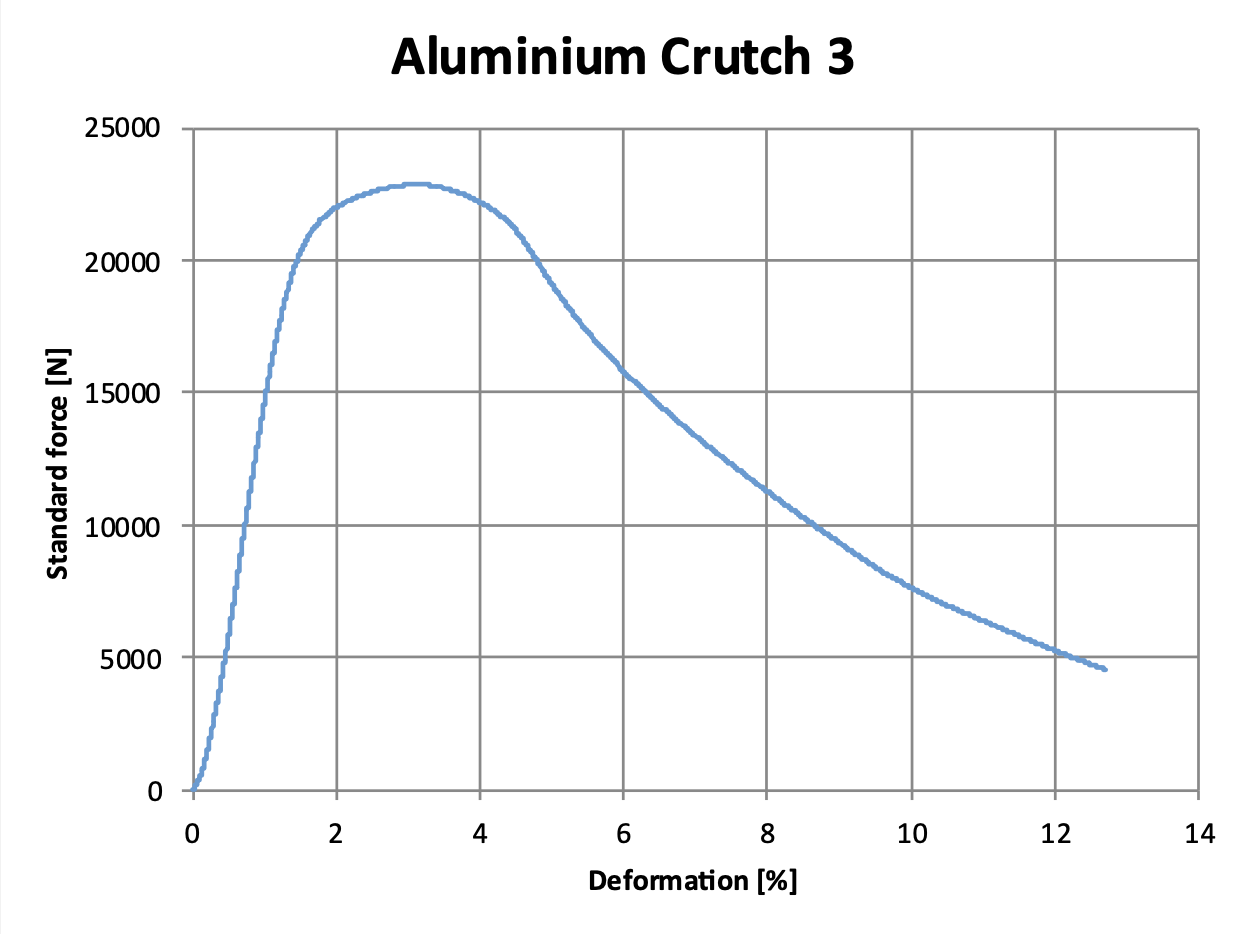 Figure 3. Aluminium crutch, shortest shaft. The main observation from the graph is that it has a high stiffness; however, it seems brittle and with little energy absorption. It should also be observed that the crutch experiences 0.2% of plastic deformation as 5530N, with a maximum force being 5824N; these numbers are relatively close. Further testing with shorter shaft lengths produced similar findings, with plastic deformation force and maximum force remarkably close to each other, with a difference of 5N and 127N. The proximity of these two values indicates that the crutch has a high stiffness but limited ductility, meaning that after high loads have been surpassed, it will fail abruptly.
According to BS EN ISO 11334-1:2007, elbow crutches must withstand a static axial load of at least 100kg without structural failure. Mottaghi, et al (2025) gives an example for the fact that there are alternative materials to aluminium by showing how an open source 3D printable crutch “not only surpasses the requirements of the ISO method for load capacity (1,516.3 ± 169.9N, which is 51.6% percent above needs), weighs a fraction of comparable commercial systems (0.612kg or 27% of proprietary devices)”.
These findings highlight that while the aluminium crutch meets required load standards, their brittleness and limited ductility may reduce long term comfort due to poor shock absorption. This can be noted through the interviewee’s response to the fatigue and discomfort they endured. The participant also noted how the rubber feet constantly wore down and broke. This indicated that the contact components experience significant compressive and shear stress through repeated use. This comment aligns with the findings that there is limited energy absorption. From a design perspective, future crutch design should balance both the stiffness of the crutch while also ensure material dampening.
Discussion
The findings above demonstrate that although current crutches meet the strength requirements that British Standards set, as well as showing their strength and practicality in use, they fail to address long-term comfort, emotional well-being, and sustainability. Within the lab testing, it became apparent that the crutches provided high stiffness, however, limited ductility, making them strong but brittle. This is linked to the interviewee’s discomfort in their wrist and shoulder and therefore having to use padding such as socks and zip ties. Hügle et al (2017) talks about this in their paper and discusses how users felt pain in their wrist and their ulnar shaft and forearm. A key takeaway from all this evidence is that designers should ensure the safety of the user by using materials that withstand the forces endured by it but also ensuring the user gets their desired comfort when using it. A more ergonomic design should balance flexibility, allowing for material dampening and, by extension, user comfort.
Beyond physical strain, the findings highlight emotional and social challenges. The interviewee mentioned on several occasions how they experienced depression and social withdrawal when using their forearm crutches. Wang et al (2025) approached the subject, saying how existing designs lack consideration for users’ emotional needs. It has become apparent that designers and manufacturers focus on clinical functionality over emotional design. This, therefore, makes the user feel disabled rather than empowered when using products. The takeaway from this interpretation should be that designers should allow for colour, form, and material tactility to promote dignity and self-expression.
Looking back at the lab data that was collected, the max load of 5824N showed the material had low ductility. This max load however, far surpassed the British Standards (2007) requirement of 100kg force. Mottaghi et al (2025) were able to show reports of their polymer design exceeding the Standards’ strength requirements while having 73% lighter. Interestingly, this can be viewed as counterproductive. The interviewee mentioned that the crutches they were using could do with having more weight on them. This can still be achieved while opting for more sustainable materials and manufacturing processes. Any future designs should deeply consider material choices that allow them to achieve strength requirements while allowing the product to have a circular lifecycle.
All three of the topics investigated point to an isolated design thinking process when it comes to the design of forearm crutches. This can be attributed to the requirements set out by the British Standards, where the focus is on static load and not on sustainability and user comfort. Further to this, no thought is given to the lifecycle of the product, with the user’s ferrule wearing down over time. Future standards and designs might consider impact dampening and material recyclability as a performance metric, as a pose to focusing on exclusively on load metrics. This would allow for ergonomics, usability, and sustainability to be integrated and redefine what a successful assistive product is.
The design recommendations can be placed into three categories:
- Material choice: Recycled polymers reinforced with biomaterials to add weight satisfy both material sustainability and interviewees’ recommendation of added weight with the crutch design. This, paired with dampening materials or mechanisms, prevents forearm and shoulder discomfort and less wear on consumable components, as mentioned by the interviewee.
- Standardised and modular components: Replaceable cuffs, handles and ferrule would allow for ease of repair as opposed to full replacement. However, components should be standardised where possible. Ferrules are an example of this, as there is no need for user misunderstanding via different sizing.
- User personalisation: Neutral or customisable forms and colours can be introduced as a design requirement to reduce the stigma of forearm crutches, disabling users instead of empowering them. Wang et al (2025) agree with this idea that current designs lack consideration for the emotional needs of the user.
The reason that these three categories are so key to future designs is that they all interact together. Stiffness within the material means that the users will feel discomfort in their forearms and shoulders, leading to a stigma of disability instead of empowerment, which then leads to the crutches being disposed of and not being reused or recycled, making their lifecycle linear, not circular.
There are, however, limitations to this report. A single interviewee sample, a small lab data set and limited access to standards mean that not all design gaps can be fully identified and therefore, this report should be viewed as an exploratory study intended to identify broader design gaps.
By merging ergonomic knowledge, users’ emotions and sustainable materials, the definition of what a successfully designed and manufactured crutch is, can be changed and become more compliant with user wellbeing and sustainability.
Conclusion
To conclude, this report evaluated the design of forearm crutches through analysis of ergonomics, user experience and material sustainability using both an interview with a semi structured interview with a long-term user and laboratory testing and supported by secondary research from academically credible journals. My findings confirmed that while current aluminium designs exceed British Standards load requirements, the limited ductility means that users can experience wrist and shoulder discomfort. The user interview and secondary sources highlighted that there is a need for emotional and empathetic design with personalisation to make crutches equally comfortable for the user. Sustainability testing revealed that although its properties provide strength and reliability, poor recyclability undermines long-term sustainability. When it comes to future designs for forearm crutches, it should be underlined that it is important to factor in comfort, empathetic design, and sustainability holistically so that all three criteria can be met. Although the research was limited in scale, it identifies key areas for redesign and further testing.
References
Hügle, T., Arnieri, A., Bünter, M., Stefan, S., & Mündermann, A. (2017). Prospective clinical evaluation of a novel anatomic cuff for forearm crutches in patients with osteoarthritis. Biomed Central, 2017, 1–2.
Mori, Y., Yokoyama, S., Yamashita, T., Kawamura, H., & Mori, M. (2024). Development of Assistance Level Adjustment Function for Variable Load on a Forearm-Supported Robotic Walker. Academic Search Ultimate, 19.
Mottaghi, M., Woods, M., Danier, L., So, A., Reeves, J. M., & Pearce, J. M. (2025). Open-source 3D printable forearm crutch. PLoS ONE, 1–20.
Rodrigues, Y. W., & de Souza, F. F. (2023). Design and stigma: the relation between mobility aid and stigmatization of older people. PerCursos.
British Standards Institution. (2007). BS EN ISO 11334-1:2007 Assistive products for walking manipulated by one arm. Requirements and test methods. Elbow crutches.
Wang, T., Zhao, Y., Zhang, X., Xie, Y., & Pang, L. L. (2025). Design of walking aids for the elderly based on the Kano-AHP-FEC method. Scientific Reports.
Werner, V. G., Plaass, C., Ettinger, S., Claassen, L., Altemeier-Sasse, A., Tuecking, L.-R., … Yao, D. (2025). Patient Preferences and Functional Outcomes of Forearm Crutches vs Hands-Free Single Crutches After Foot and Ankle Surgery: A Randomized Crossover Trial. Foot & Ankle Orthopaedics.